Formula Guide
The Coast FIRE Formula Explained
A plain-English walkthrough of the inputs and formula behind a Coast FIRE estimate, with the assumptions stated clearly.
 Noah BennettEditorial contributor
Quick answer
What this article explains
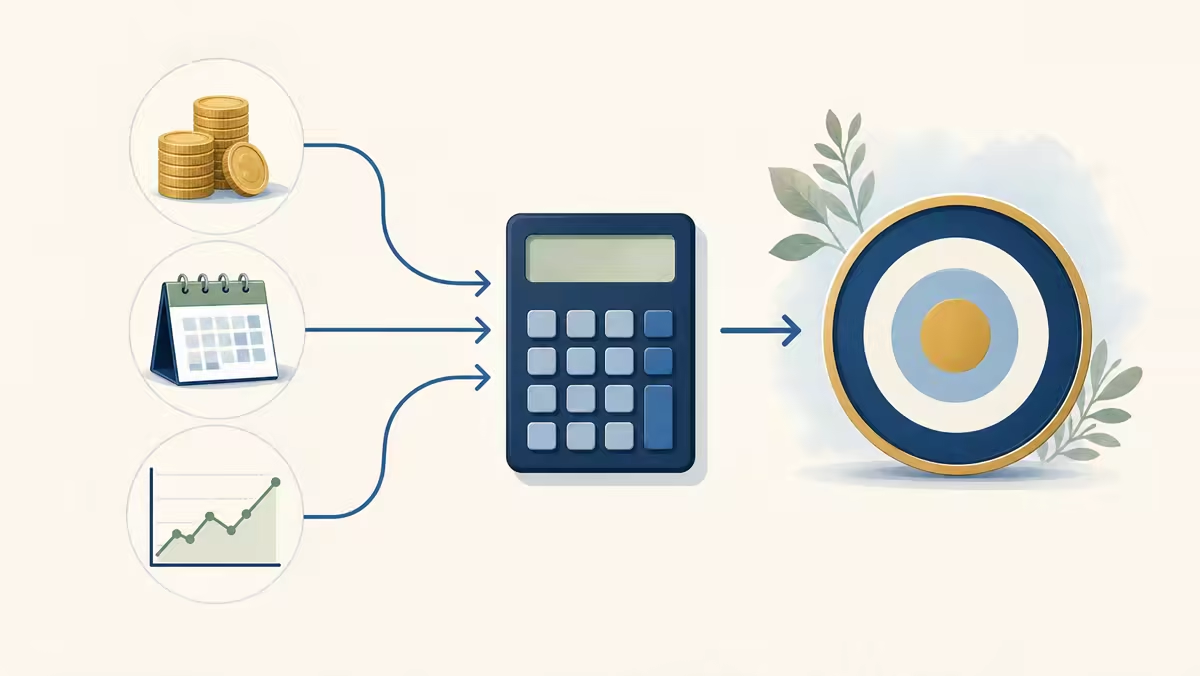
The Coast FIRE formula works backward from a retirement portfolio target. It estimates today’s required invested assets by dividing that target by the assumed inflation-adjusted growth factor over the years until retirement.[1][2]
Step 1: estimate the retirement target
The calculator uses: retirement portfolio target = annual retirement spending ÷ safe withdrawal rate. Both inputs are planning assumptions that you can adjust.[1][2]
For example, $30,000 divided by 0.04 produces a $750,000 target in today’s dollars. Taxes, fees, pensions, and Social Security are not included in this simplified model.
Step 2: estimate the Coast FIRE number
The calculator uses: Coast FIRE number = retirement portfolio target ÷ (1 + real annual return) raised to the years until retirement. Its real annual return is the expected annual return minus inflation.[1][2]
When the expected return equals inflation, the real return is zero and the current Coast FIRE number equals the retirement target. Negative real-return scenarios are allowed, but they deserve careful interpretation.
What the formula does not capture
A compact formula cannot model every retirement risk. Actual returns vary, inflation can differ from expectations, and taxes, fees, health costs, debt, employment changes, and spending changes all matter.[1][2]
- The result is displayed in today’s dollars for a clearer comparison.
- Monthly contributions are modeled at the end of each month and assumed to keep pace with inflation.
- Use the estimate to compare scenarios, not to treat a projected return as guaranteed.
The simplified calculator formula
Retirement portfolio target = annual retirement spending ÷ withdrawal rate
Coast FIRE number = retirement portfolio target ÷ (1 + real annual return)years to retirement
For this educational model, real annual return = expected annual return − inflation. It is a simplified assumption, not a forecast.
Try the Coast FIRE Calculator
Compare your own retirement spending, timeline, savings, return, and inflation assumptions in a private browser-based estimate.
Common questions
Why does inflation matter in the formula?
It helps put the return and spending assumptions on a purchasing-power basis in this calculator’s simplified model.
Does the formula include investment fees?
No. Fees and taxes are exclusions and should be considered separately when evaluating a plan.
Sources and further reading
These links provide general background. They do not validate any individual projection or replace professional advice.